

Search
-
or select -


Elk Grove Acura Service Department
Struts, shocks, bushings, ball joints and steering components inspected and replaced to Acura specification by certified technicians, so your vehicle rides and steers the way it was engineered to.
Schedule Service Online Call Service: (877) 707-7834Brakes announce themselves. Suspension does not. Struts and bushings degrade over tens of thousands of miles, and because the change happens a little at a time, most drivers adapt to it without ever noticing there is something to adapt to. People routinely describe a car as feeling new again after a strut replacement they were reluctant to authorize.
The signs below are the ones worth acting on. None of them is an emergency on its own, but every one of them is your vehicle telling you a component has moved past its useful life.
A single hollow knock as you cross a seam or a driveway lip usually points to a worn sway bar link, a tired bushing or a failing strut mount. It tends to be worse when the road is cold.
A healthy damper settles the car in one motion. If the nose rises and falls a second or third time after a dip, the struts or shocks have stopped controlling the spring.
Scalloped patches around the tread shoulder are a damper problem, not a tire problem. The wheel is bouncing rather than staying planted, and a new set of tires will wear the same way.
Needing small constant corrections to hold a lane on I-5 usually means play somewhere in the steering linkage or a worn tie rod end, rather than anything to do with the wheel itself.
If the car leans further into corners and squats harder under braking than it used to, the dampers are no longer resisting weight transfer the way they did when new.
One corner sitting visibly lower than the others points to a spring or a strut that has lost its ability to carry load. It changes how the vehicle handles in an avoidance maneuver.
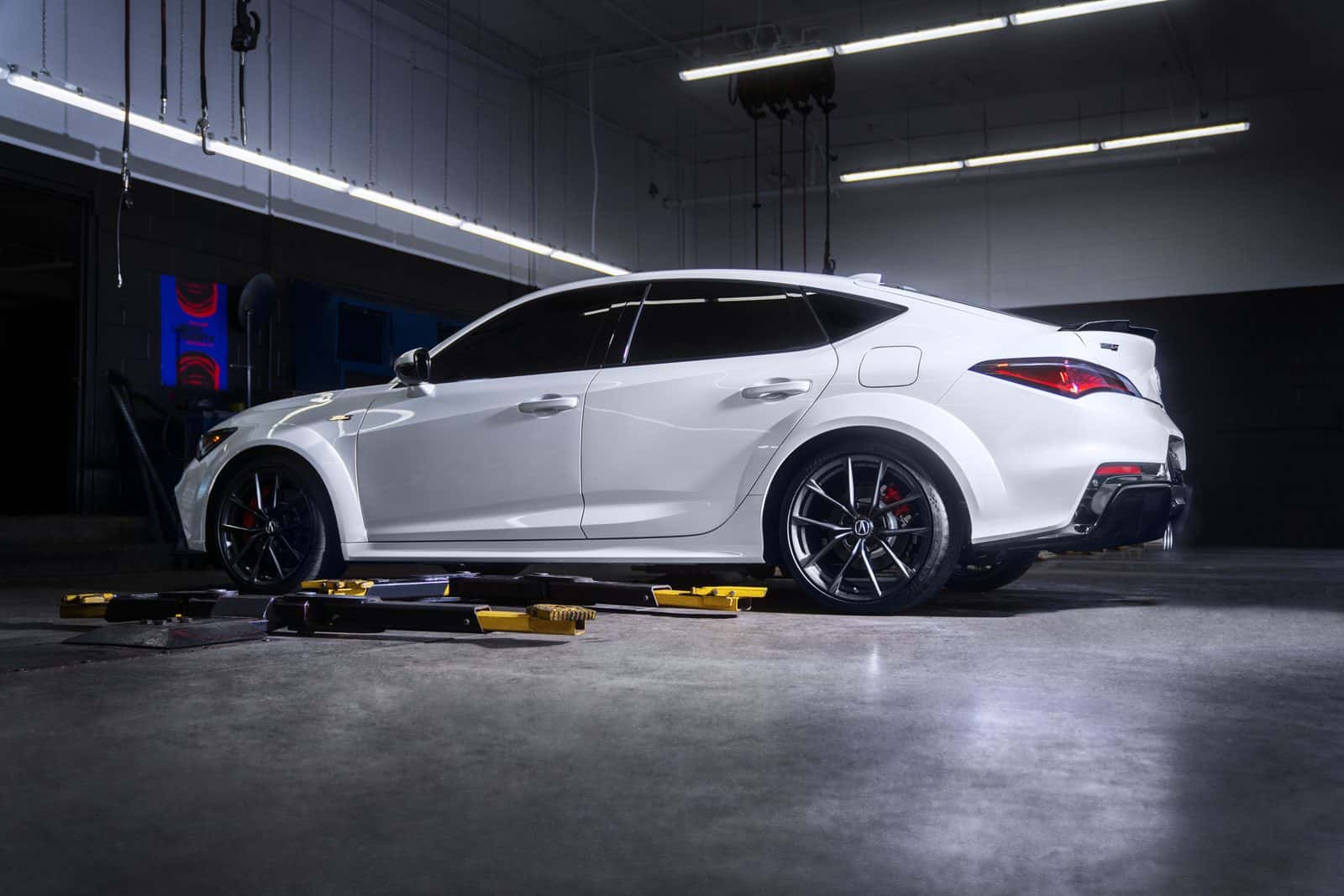
These are the consumable. Inside each one, oil is forced through small valves to convert the spring's motion into heat, and over time the valving wears, the oil breaks down and the seals let go. Degradation is gradual and symmetrical, which is exactly why it hides. Dampers are replaced in pairs across an axle, because a new unit on one side and a worn one on the other gives you a car that behaves differently in a left turn than a right.
Rubber and hydraulic bushings locate the control arms and isolate road noise from the cabin. They dry out, crack and lose compliance with age and heat, which is how a quiet car slowly becomes a noisy one. Worn bushings also let the suspension geometry move under load, so the alignment reads correctly on the rack and still drifts on the road.
These are the pivots that let the wheel steer and travel. They wear as clearance, and clearance shows up as vague steering, a knock over bumps and tire wear that no adjustment will fix. They are also the components where wear matters most, so they get checked by hand rather than by eye.
Springs carry the vehicle's weight and rarely fail, but they do sag over a long life and they can crack. Sway bars control body roll through small end links that are among the first parts on any car to start knocking. A sway bar link is an inexpensive component whose failure sounds far more alarming than it is.
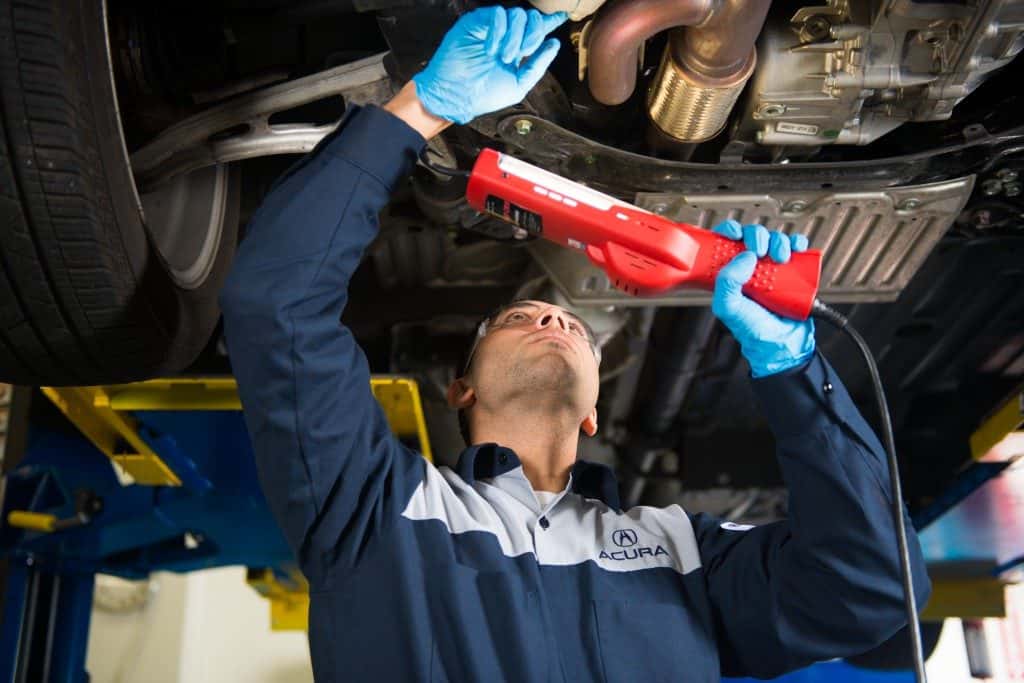
On a lot of vehicles, suspension is a self-contained mechanical system. On a modern Acura it is wired into the drivetrain, the steering and the driver assistance package, and that changes what a correct repair involves.
SH-AWD does not just send torque rearward; it distributes it between the left and right rear wheels to help the car rotate through a corner. That system is calibrated around a known suspension geometry. Worn rear bushings or mismatched dampers change how the chassis responds to torque vectoring, and the result is a car that feels less settled rather than one that throws a warning light.
Type S models and several higher trims use dampers that adjust their firmness continuously and change character with the drive mode. These are not interchangeable with conventional units, they are electrically connected, and diagnosing one properly means reading what the system is commanding as well as inspecting the hardware. A shop without the factory tooling is working blind on these.
P-AWS steers the rear wheels by small amounts to sharpen turn-in and stabilize the car at speed. Combined with electric power steering, this means the steering system is a set of sensors and actuators as much as it is a mechanical linkage, and steering complaints are diagnosed accordingly rather than by replacing parts in sequence.
Lane Keeping Assist and Road Departure Mitigation steer the vehicle. They are calibrated to a car that tracks straight and responds predictably to steering input. Worn steering or suspension components can make those systems feel intrusive or inconsistent long before anything sets a fault code, which is a good reason to have the chassis checked when a driver assistance feature starts behaving oddly.
Where a car spends its life matters more than the odometer, and valley driving has a specific signature.
Long stretches of I-5 and Highway 99 are concrete slab rather than asphalt, and the expansion joint between every slab is a small, evenly spaced impact repeated for the whole commute. That steady rhythm is hard on strut mounts and bushings in a way that smooth asphalt simply is not — which is why a high-mileage highway car here can need suspension work earlier than its service history suggests.
Heat is the other factor. Rubber bushings, boots and mounts age faster through triple-digit summers than they do in a mild climate, and a car that sits outside all day in an Elk Grove parking lot is heat-cycling those components every single day. The components themselves are also the parts most exposed to the grit and water that come up off levee and delta roads in winter.
And if you tow, load a roof box for Tahoe, or regularly run the vehicle full of passengers up Highway 50 or I-80, the suspension is carrying more than it does on a commute. That does not make failure likely, but it does move the inspection forward.
These two get confused constantly, and the distinction is worth holding onto because it decides which repair you actually need.
Alignment is geometry: the angles at which the wheels meet the road. Suspension is the set of components that hold those angles in place. An alignment adjusts the settings; it cannot restore a worn part.
That relationship runs one way. Worn struts, bushings or tie rod ends will pull the geometry out of specification, and an alignment performed on tired components will not hold, because the parts move under load in a way the rack cannot see. It is also why replacing struts or steering components is followed by an alignment as the closing step of the job, not as an alternative to it. If the components check out and the car still pulls or wears tires unevenly, then it is an alignment problem, and our alignment service is the right place to start.
Current service offers, including any that apply to this work, are listed on the service specials page.
Suspension and steering service is available across the current and recent Acura lineup, including the adaptive damper systems fitted to Type S models.
Factory-trained on these specific vehicles, including SH-AWD, the adaptive damper system and Precision All-Wheel Steer.
Dampers and steering parts built to the tolerances the chassis was calibrated around, rather than a generic equivalent.
Electronically controlled dampers and electric steering can be interrogated properly instead of diagnosed by substitution.
Components are loaded and checked by hand. You get told what is worn, what is fine, and what can reasonably wait.
Repairs documented to Acura standards, which matters if a related claim comes up later.
Steering and suspension replacement finishes on the alignment rack, so the repair holds rather than needing a second visit.
We serve drivers from Elk Grove, Sacramento, Roseville, Stockton, Modesto and Fairfield, and from Davis, West Sacramento and Woodland on the west side of the Causeway.
There is no fixed interval, because dampers wear by use rather than by time. Road surface, load and climate all move the number, and valley driving on concrete slab highways is harder on them than smooth asphalt. Rather than replace on a schedule, have them inspected when the vehicle is already on a lift; a worn damper can be identified by hand long before it fails outright.
Across an axle, yes. A new damper controls the spring differently from a worn one, so replacing only one side leaves the car behaving differently in a left turn than a right and loads the tires unevenly. Front and rear can be done separately, since they generally do not wear at the same rate.
No. An alignment adjusts the angles at which the wheels meet the road; it does not replace worn components. A clunk or an unsettled ride is a component problem, and an alignment performed on worn parts will not hold in any case. The correct order is to inspect and repair the components first, then align.
Yes, and it is one of the most useful clues available. Cupped or scalloped wear around the tread shoulder is typically a damper problem, because the wheel is bouncing rather than staying planted. New tires fitted to a car with worn dampers will develop the same pattern, which is why the suspension is worth checking before a tire purchase rather than after.
Type S models use an adaptive damper system that adjusts firmness continuously and changes character with the drive mode. The units are electrically connected and are not interchangeable with conventional dampers, so diagnosis involves reading what the control system is commanding alongside inspecting the hardware. That requires factory tooling.
Usually clearance that has developed somewhere in the steering linkage or the suspension pivots, most often tie rod ends or ball joints. On an Acura it can also originate in the electric power steering system or in Precision All-Wheel Steer, which is why the diagnosis starts with an inspection and a scan rather than with parts replacement.
It can affect how those systems feel. Lane Keeping Assist and Road Departure Mitigation apply steering input and are calibrated to a vehicle that tracks straight and responds predictably. Wear in the steering or suspension can make them seem intrusive or inconsistent well before anything sets a fault code, so it is worth having the chassis checked if a driver assistance feature starts behaving differently.
Yes. Suspension and steering service, warranty work and open recalls are all handled here regardless of where the vehicle was purchased, for drivers from anywhere in the Sacramento area.
Book online in under a minute, or call the service department and describe what you are feeling and where. Either way the components get inspected before anything is recommended.
Schedule Service Online Call Us: (877) 707-7834